Table of Contents
.
Land title verification in Lagos means confirming a seller’s ownership at the Lagos State Land Registry, checking the survey plan with the Office of the Surveyor-General, and ruling out omo-onile or government claims before any money changes hands. Skip this process, and you risk paying twice for the same plot: once to a seller, and again to whoever shows up during construction claiming ancestral rights.
Lagos land disputes are not a rare inconvenience. They are a structural risk of the market. As of February 2024, the Lagos State Task Force on land grabbing had received 7,500 petitions, resolved 4,283 disputes, and arrested 205 suspected land grabbers, according to Tribune Online. Over 1,500 petitions remain pending. That caseload is a warning every buyer, investor, and diaspora client should heed. Due diligence in Lagos isn’t optional paperwork, it’s the only thing standing between you and a demolished building or a court case that outlives your patience.
This guide breaks down how omo-onile schemes and fake Certificates of Occupancy work, and the exact verification steps that shut both down before you sign anything.
Who Are the Omo-Onile, and Why Do They Cause Disputes?
Omo-onile, literally “children of the landowners,” are individuals or groups who assert traditional or ancestral ownership over land in Lagos, often independent of whoever legally sold you the plot. According to Qudlaw Homes, they frequently act as intermediaries in land transactions or impose fees during construction. Some communities recognize their role in traditional contexts, but the modern real estate market has seen widespread abuse of the system.
The damage isn’t theoretical. In one Alimosho community, suspected omo-onile demolished roughly 50 buildings after residents refused to pay demanded sums ranging from ₦15 million to ₦25 million, Nigeria Housing Market reported. Lagos State’s Attorney General has publicly acknowledged that property transactions across the state have been significantly hindered by omo-onile and ajagungbale activities, prompting the government to lean harder on the Lagos State Properties Protection Law of 2016.
Common Omo-Onile Tactics to Watch For
- Double or multiple sales. The same plot gets sold to several buyers, each believing they hold a valid title. This guarantees a dispute the moment two owners try to develop the land.
- Escalating “development levies.” Groups commonly demand foundation levies, development fees, fencing fees, and roofing fees at different construction stages, per The Africanvestor. They often appear suddenly during active construction to demand immediate payment under intimidation.
- Forged supporting documents. Fraudulent actors hand buyers fake titles or documents to make their claim look legitimate.
- Harassment and site blockades. Tactics include organizing community members to physically block site access and issuing verbal threats to buyers or construction workers.
How to Protect Yourself From Omo-Onile Claims
- Interview the neighbors first. Long-term residents usually know a plot’s dispute history and which omo-onile groups are actively active in the area.
- Confirm registration with the Local Government. Many legitimate omo-onile groups in Lagos and southwestern Nigeria have registered with local government authorities. A check at the LGA office separates genuine customary claimants from opportunists.
- Hire an independent surveyor. A licensed surveyor can confirm the land’s coordinates against government records and flag conflicting claims before you commit funds.
- Insist on family-head signatures. For land under customary ownership, meet all principal family members and confirm recognized family heads have signed the documents.
- Never negotiate on-site alone. Bring a lawyer or licensed agent to any meeting with omo-onile representatives, and put every agreed payment in writing.
What a Fake Certificate of Occupancy Looks Like
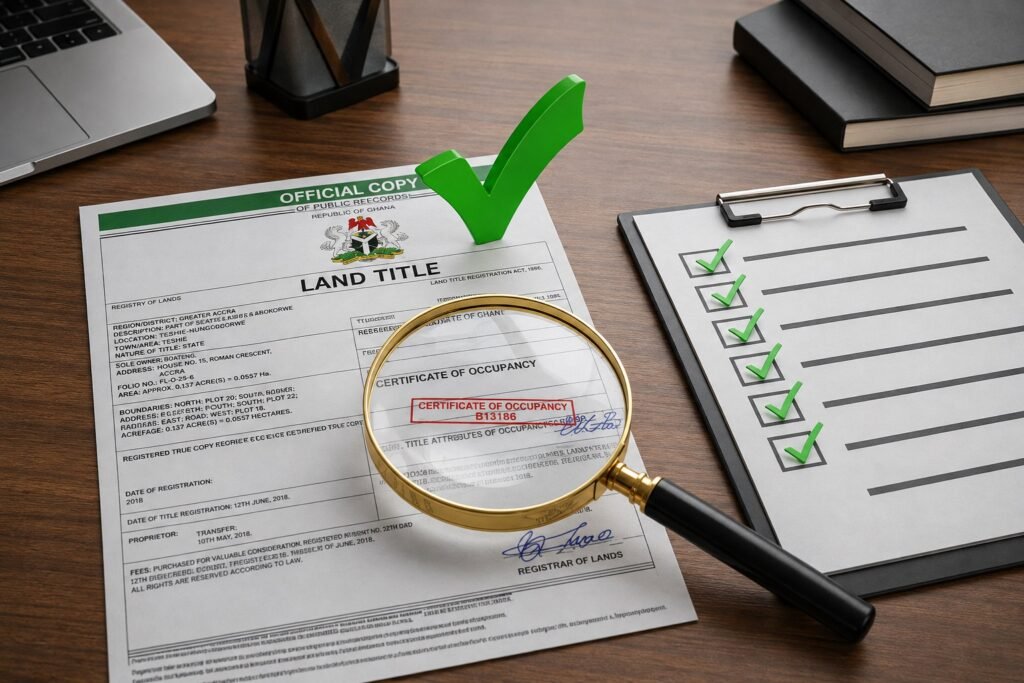
A Certificate of Occupancy (C of O) is the legal document proving a right of occupancy over land under Nigeria’s Land Use Act of 1978, which gave state governors authority to manage all land within their states. Because it carries so much legal weight, it is also the most forged document in the Lagos property market.
Fraudsters routinely produce fake Certificates of Occupancy that look almost identical to genuine ones but carry no legal recognition at the Lagos State Land Registry, notes PropertyPro Insider. Beyond outright forgery, buyers also run into:
- Double allocation fraud, the same plot sold to multiple buyers, each holding a seemingly valid C of O. This typically ends in a prolonged legal battle over rightful ownership.
- Land grabbing dressed as ownership, local land grabbers forging a C of O to claim land they don’t legally own.
- Insider collusion, corrupt officials within the land administration system colluding with fraudsters to issue or endorse fraudulent certificates.
Physical Red Flags on a Suspect C of O

A trained eye can catch several warning signs before a document ever reaches the registry. Per a Chaman Law Firm verification checklist, common tells include a missing Alausa registration number, a photocopy without an embossed seal, wrong fonts or spacing, and no official signature or date. Any one of these should pause a transaction until the document is checked at source.
How to Verify a C of O and Other Land Documents in Lagos
Verification is a multi-agency process, not a single phone call. The core documents to verify are the Certificate of Occupancy, Governor’s Consent, Deed of Assignment, and Survey Plan. Together, these establish the status of the land and who legally owns it, according to Real Estate Best Deal.
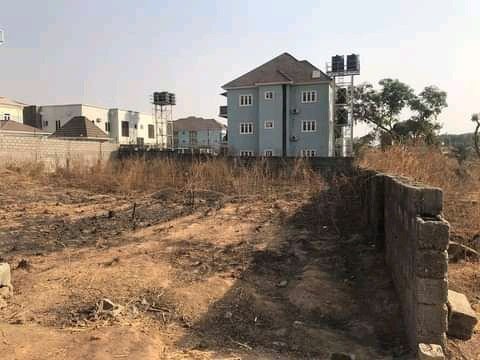
Step 1: Physical inspection. Visit the land in person to confirm it exists and matches the boundaries and description in the documents. This step alone eliminates a surprising number of scams involving land that doesn’t match its paperwork.
Step 2: Official search at the Land Registry. The Lagos State Lands Bureau at Alausa holds the complete database of all issued Certificates of Occupancy. This is your primary source of truth, not the seller’s copy. You submit a formal verification request with the property details, pay a government fee that varies by case, and keep the receipt as proof. Processing takes a few days to a couple of weeks. The registry then issues a report confirming whether the C of O is authentic and valid.
Step 3: Surveyor-General charting. The Office of the Surveyor-General of Lagos State keeps records of all registered survey plans and can confirm whether a plot’s coordinates match its actual boundaries, explains ATLS Realtors. This “charting” process checks whether the land falls under government acquisition, overlaps another property, or sits within a restricted zone such as a right-of-way or drainage channel. Any of those can get a building demolished even after a legitimate purchase.
Step 4: Gazette and encumbrance search. For land presented as family or excised property, confirm it has actually been excised or gazetted, and verify the publication date at Alausa. A parallel title search should also check for court cases, mortgages, or liens tied to the property.
Step 5: Independent legal review. A property lawyer reviews the title documents, verifies their authenticity, and confirms the seller genuinely holds the legal right to sell. This safeguard costs a fraction of what a bad purchase costs.
Fees and Timelines to Expect
Costs vary by land size and location, but recent figures give a useful benchmark. A fresh C of O for a 600 sqm residential plot in Lekki can total ₦500,000 to ₦2 million. That figure covers processing fees, a premium of 5–10% of fair market value, and survey costs, according to PWAN Stars. A separate estimate from Beyourlandlord puts general Lagos C of O costs at ₦500,000 to ₦1.5 million, with premium areas like Ikoyi and Lekki costing more. On timing, the publication and objection window alone runs about 21 days. Title search and encumbrance checks add ₦20,000–₦50,000 on top. Budget for both the money and the weeks, rushing this stage is exactly what fraudulent sellers count on.
Genuine vs. Fake Land Documentation: A Quick Comparison
| Signal | Genuine Document | Red Flag |
| Registration | Verifiable Alausa registration number on file | Missing or unverifiable number |
| Seal | Embossed government seal | Photocopy with no embossment |
| Survey status | Confirmed by Surveyor-General charting | Coordinates don’t match records or overlap another plot |
| Family consent | Signatures of all recognized family heads | One signatory claiming sole authority |
| Registry search | Land Registry confirms current, unencumbered title | No record found, or flagged under litigation or acquisition |
| Omo-onile status | Registered with the LGA as a recognized customary group | Unregistered group demanding ad-hoc payments |
Why Buyers Choose to Work With a Trusted Agent

Given the fees, multi-agency verification, and weeks of processing involved, most serious buyers bring in a property professional with existing relationships across the Lagos State Land Registry, the Surveyor-General’s office, and local community land structures. This matters even more for diaspora Nigerians purchasing remotely, who can’t easily interview neighbors or sit in on a registry search themselves.
At Salesville Properties, every listing we bring to a client has already cleared title verification, survey charting, and encumbrance checks before it reaches the market. You won’t learn about an omo-onile claim after your foundation is laid.
Frequently Asked Questions
How do I check if a C of O is genuine in Lagos?
Submit a formal verification request to the Lagos State Lands Bureau at Alausa with the property details. The registry checks its records for encumbrances or government acquisition and issues a report confirming whether the certificate is authentic, usually within a few days to two weeks.
What is the difference between a C of O and a Governor’s Consent?
A C of O is the primary grant of a right of occupancy from the state. Governor’s Consent is required when that right of occupancy is transferred to a new party. Both, along with the Deed of Assignment and Survey Plan, are used to verify legal land ownership.
Can omo-onile legally stop my construction?
Not if they are unregistered and acting outside the law. The Lagos State Properties Protection Law of 2016 prohibits the use of force or self-help to take over landed property or interfere with an owner’s proprietary rights, and the state has prosecuted cases under this law.
How long does full land title verification take in Lagos?
Expect roughly two to three weeks for registry and gazette checks. The publication and objection period alone takes about 21 days, plus additional time for Surveyor-General charting and legal review.
What should I do if I discover the land I bought has a fake C of O?
Stop construction immediately. Report the matter to the Lagos State Lands Bureau and the Property Protection task force, and engage a real estate lawyer to pursue recovery or prosecution. Acting early strengthens your legal position.
Considering a land or property purchase in Lagos? Salesville Properties handles full title verification, survey charting, and omo-onile due diligence on every listing. Contact our team before you commit to a purchase.