How to own a farm in Lagos is a question more investors are starting to ask in 2026 — and for good reason.
For years, the conversation around Lagos real estate has revolved around off-plan apartments, luxury developments, and high-rise buildings promising attractive rental returns. But many investors are quietly discovering that some of the most strategic opportunities are not in crowded city districts.
They are in farmland.
While the majority of buyers chase apartments with uncertain completion timelines and modest yields, a smaller group of investors is positioning themselves differently. They are acquiring farmland located along Lagos’ expanding infrastructure corridors — areas where urban growth, logistics development, and Nigeria’s growing food economy are beginning to intersect.
This shift is creating a new kind of real estate opportunity: land that is not only appreciating in value but also capable of generating agricultural income.
Understanding how to own a farm in Lagos today means understanding where the city is expanding, where infrastructure is heading, and why farmland is quietly becoming one of the most strategic real estate assets in Nigeria.
Table of Contents
The Lagos Land Market in 2026
Let’s set the scene.
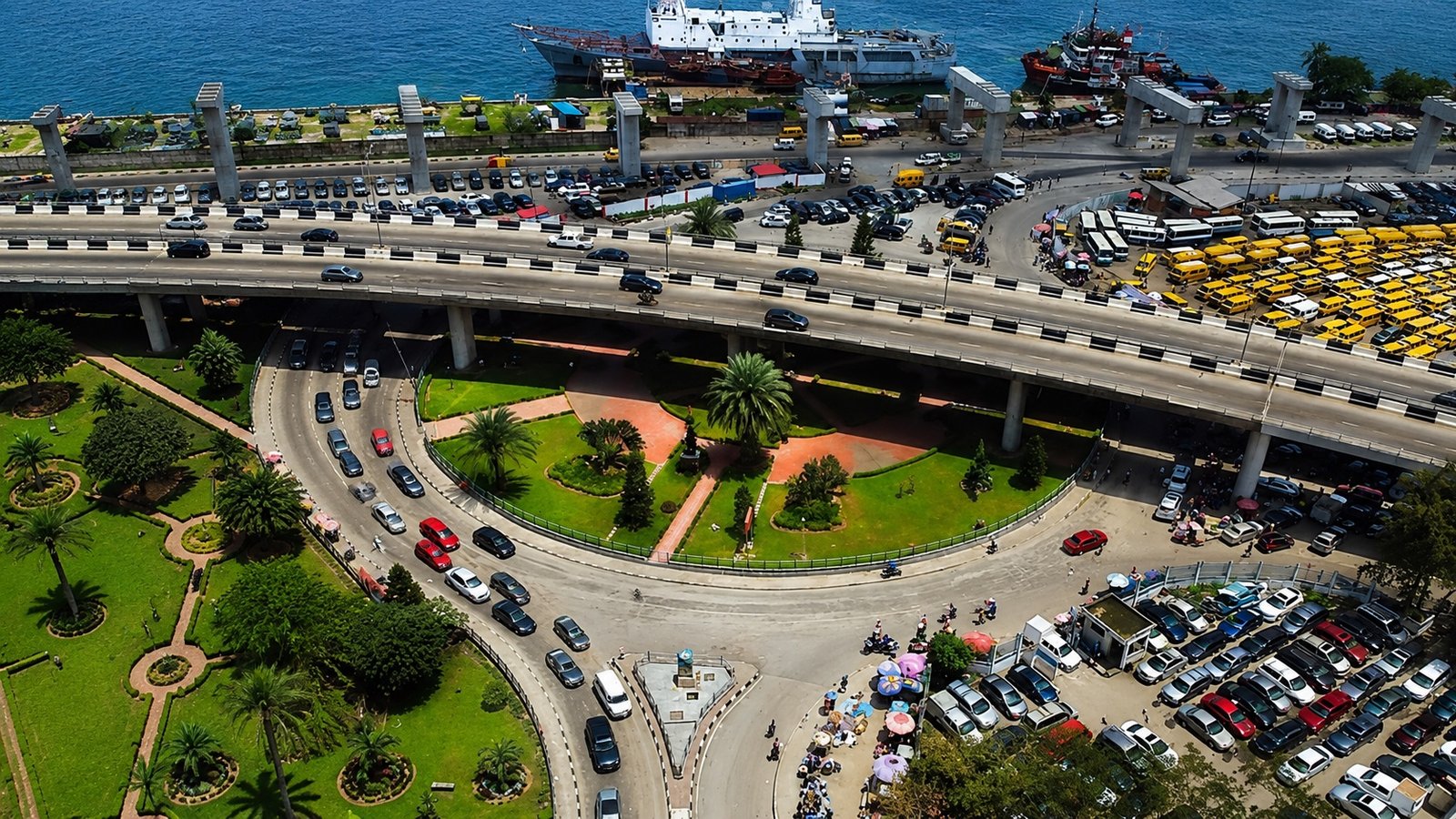
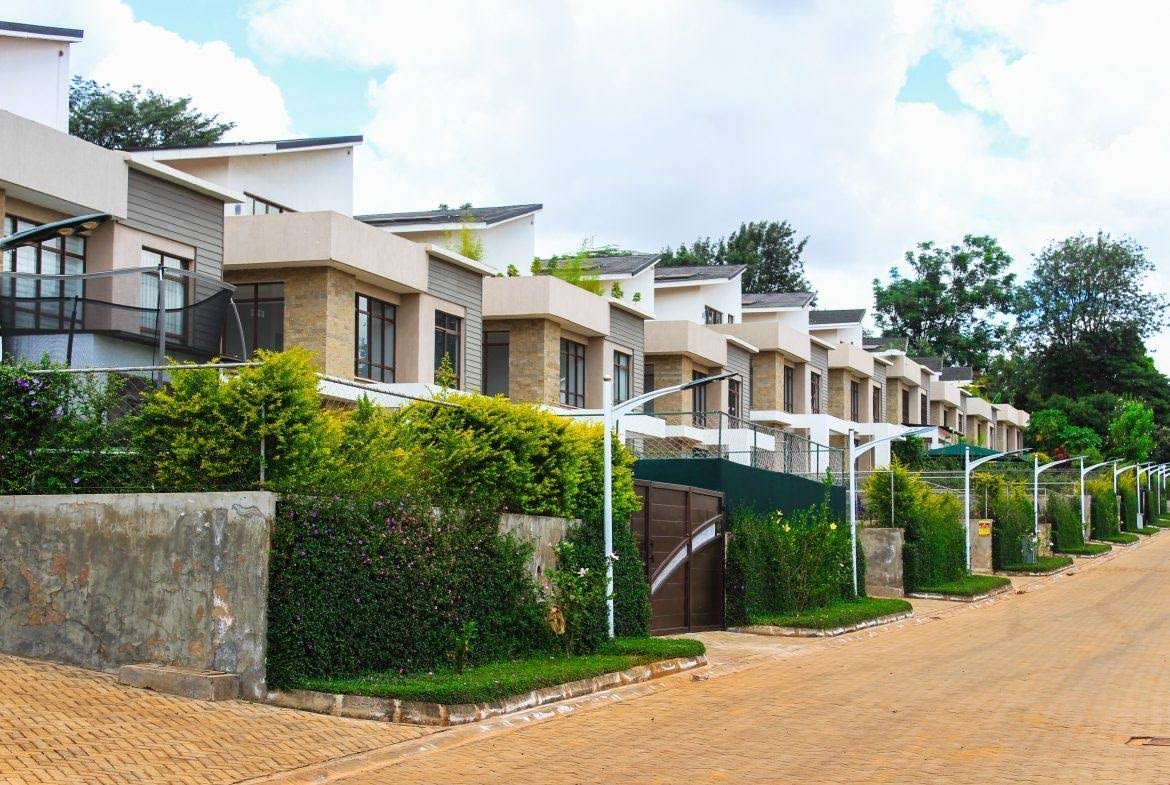
Lagos is home to an estimated 25–30 million people and growing by roughly 600,000 new residents every year. The city is physically running out of space in its traditional real estate corridors. Lekki Phase 1? Priced out. Victoria Island? Reserved for corporate tenants and the ultra-wealthy. Ikoyi? Don’t even bring your calculator unless you have nine figures in naira sitting comfortably.
So where is expansion happening? Outward. Always outward.
The Lagos State Government has been aggressively investing in infrastructure along its peri-urban and semi-rural corridors like the Lekki-Epe Expressway, the Epe-Ikorodu road project, the ongoing Lekki Deep Sea Port operations, and the broader Lekki Free Trade Zone development among other even less known places. These aren’t rumours or campaign promises. These are active, funded, on-the-ground projects that are physically reshaping what was once considered “far” Lagos.
And sitting right in the path of all that infrastructure? Farmland.
Why Farmland?
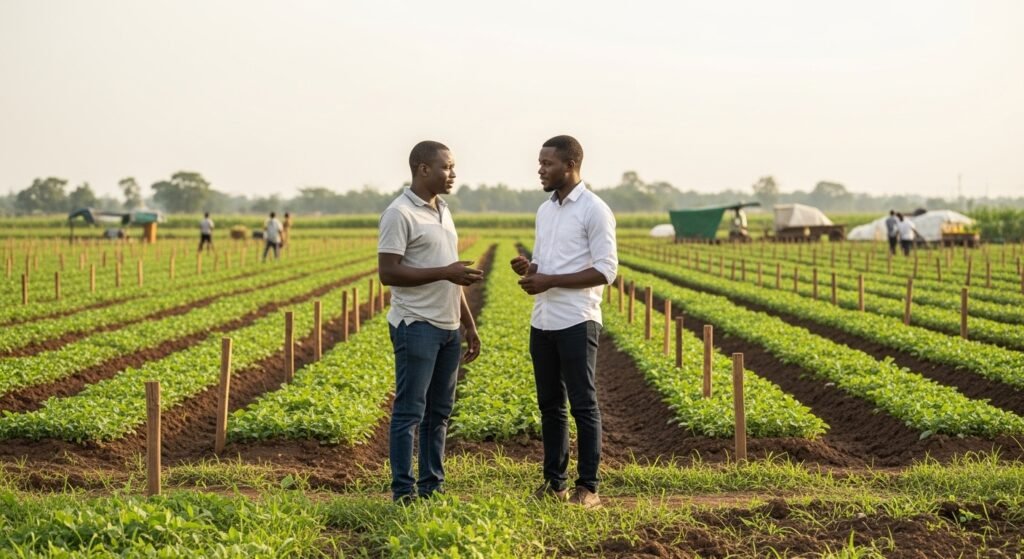
Here’s the thing about farmland that most conventional real estate conversations miss: it is doing two jobs simultaneously, and very few asset classes can say the same.
Job One: Land appreciation. As Lagos expands, farmland in growth corridors like Epe, Ibeju-Lekki, Ikorodu, and Badagry is converting from agricultural use to residential, commercial, and mixed-use development. Land that sold for ₦500,000 per plot in Epe a decade ago is now changing hands at ₦6–12 million. That’s not inflation.
Job Two: Active income generation. While your land appreciates, it doesn’t have to sit idle. Lagos farmland close to the city’s food supply is actively being leased to cooperatives, agribusinesses, and farm operators generating returns of at least ₦400,000 per acre annually depending on crop type and location. Your land works. You collect.
That combination of appreciation plus income is what makes farmland the most compelling real estate story in Lagos right now. And it’s why portfolios that were once entirely concentrated in urban residential properties are quietly diversifying into the farm belt.
The Story Of How To Own A Farm In Lagos Right Now
Not all land is created equal, and Lagos farmland is no different. Here’s where the market is most active — and most promising — right now.
Epe: The Standout Performer
If there’s one corridor that embodies the Lagos farmland opportunity, it’s Epe. The combination of the Lagos State Government’s declared ambition to make Epe an agricultural and economic hub, the proximity to the Lekki Free Trade Zone, and rapidly improving road infrastructure has turned this once-sleepy waterside town into one of the hottest land markets in Nigeria.
Investors who moved into Epe farmland between 2018 and 2021 are sitting on returns that would make most stock portfolios blush. The window hasn’t closed — but it is narrowing. Entry prices have climbed and will continue to climb as awareness grows.
Ibeju-Lekki: Where Infrastructure Meets Inevitability
The Dangote Refinery — the largest single-train refinery in the world — is operational in Ibeju-Lekki. The Lekki Deep Sea Port is receiving vessels. The Free Trade Zone is active. This is no longer an area you invest in hoping something will happen. Something already happened. The question now is whether you want to be positioned for the second wave of appreciation or watch from the sidelines.
Farmland here still offers competitive entry pricing relative to what the area will look like in five years, and the population density being driven by industrial activity guarantees demand for both developed real estate and agricultural produce.
Ikorodu: The Closest Farm Belt to Lagos Mainland
Ikorodu deserves far more attention than it gets. Sitting at the northern edge of Lagos, it offers farmland that is close enough to Lagos markets for same-day produce delivery — meaning active farming here isn’t speculative, it’s immediately commercial. Land prices remain reasonable compared to the Island corridors, and infrastructure investment along the Ikorodu road network is quietly adding zeros to valuations.
Badagry: The Patient Investor’s Play
Badagry is for those who understand that the biggest returns go to those who arrive before the crowd. As the Lagos-Seme border corridor develops and cross-border trade grows, Badagry farmland offers the lowest entry prices in the Lagos market with some of the highest long-term upside. This is the kind of land you buy, hold, and revisit in seven years with a very satisfied expression on your face.
The Currency Angle
Nigeria’s real estate market prices in naira. You invest in foreign currency. You hold a hard asset, that is land, that cannot be inflated away, seized by a server crash, or wiped out by a market correction on the other side of the world.
When the naira weakens, your foreign currency buys more land. When the naira strengthens, as the current monetary policy environment under the CBN’s tightening cycle is gradually forcing, your naira-denominated asset gains in foreign currency terms automatically. And throughout all of that, the land itself is appreciating.
It is, in plain terms, a multi-layered hedge. And in an era when every asset class from crypto to equities is experiencing volatility, a Lagos farmland investment is the kind of anchor that quietly outperforms.
Things to Know and Keep in Mind.
Let’s be practical, because the biggest barrier for serious investors isn’t money. It’s not knowing exactly how the process unfolds.
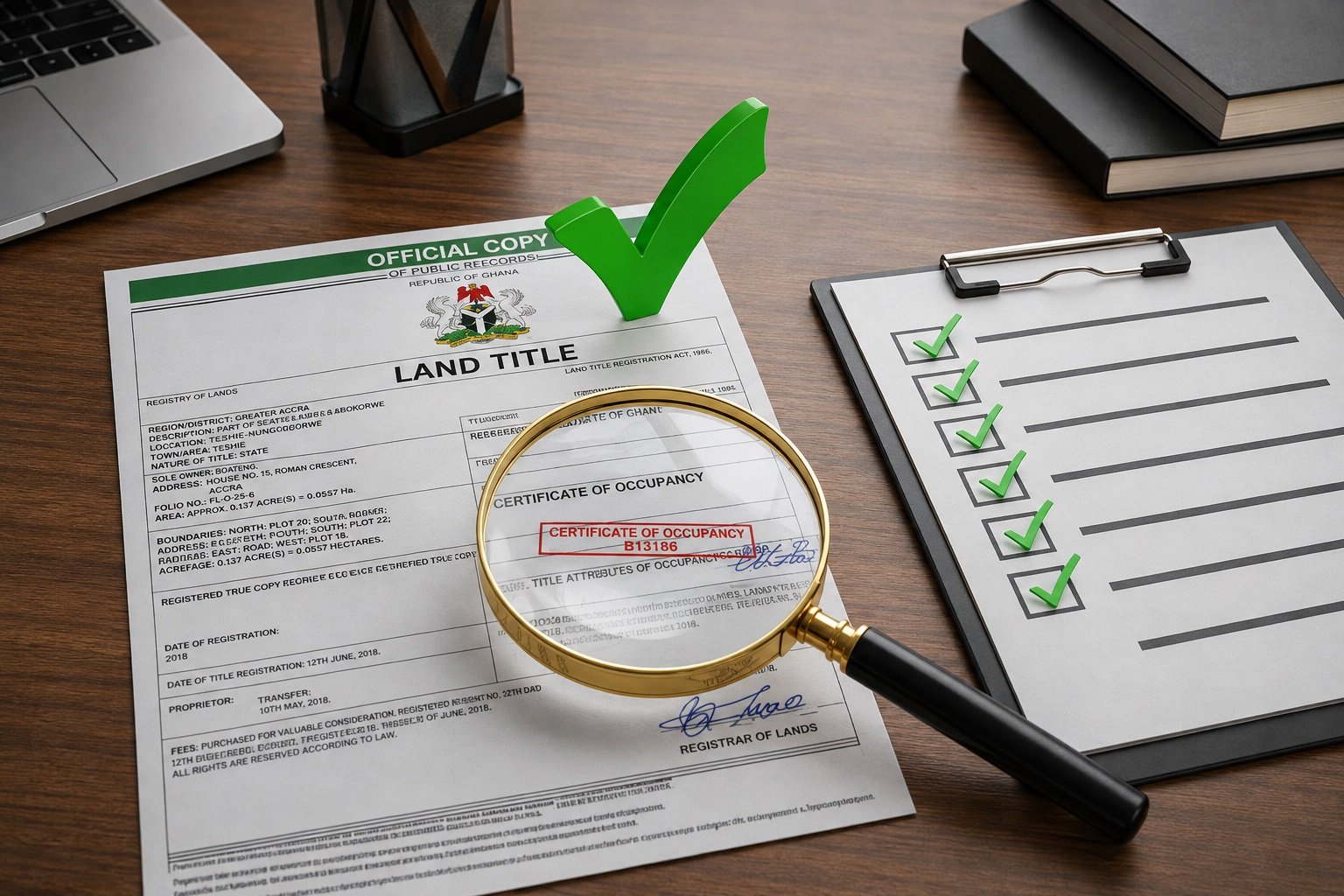
Due Diligence First, Always Before any money moves, title verification is non-negotiable. The hierarchy of land titles you want is:
Certificate of Occupancy (C of O)
Governor’s Consent
Deed of Assignment with a registered Survey Plan
Any transaction that can’t produce verifiable documentation at this level requires more scrutiny, not more enthusiasm.
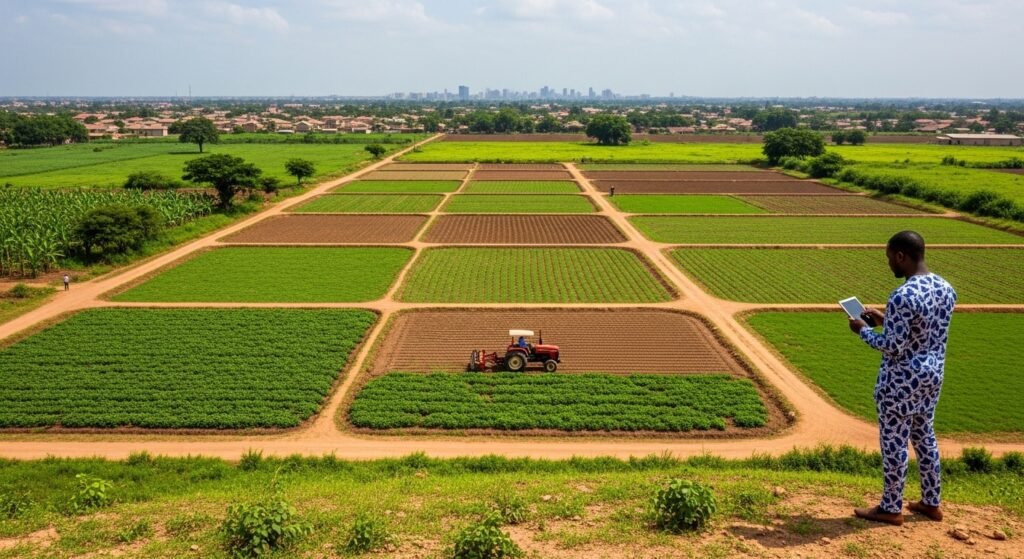
Remote Buying is Now Standard The era of “I can’t buy Lagos property because I’m not on the ground” is over. Reputable real estate firms now offer GPS-tagged video walkthroughs, drone footage, satellite mapping, and digital documentation — specifically designed for buyers who are not physically in Nigeria. The process is streamlined, and the protections are real.
Budget for the Full Transaction Cost Land price is not your only cost. Factor in legal fees, Land Registry charges, Lagos State Land Use Charge, survey costs, and any applicable estate development levies. Typically budget an additional 10–15% above the land price for transaction and registration costs.
Most importantly, Engage the Right People A registered Lagos real estate firm with a verifiable track record, a Lagos-based property lawyer who represents your interests (not the seller’s), and an independent surveyor to verify boundaries and GPS coordinates. This team costs a fraction of what a bad transaction costs.
The Bottom Line
Lagos farmland in 2026 is not a gamble. It is a calculated, well-documented, increasingly mainstream investment that is delivering appreciation, income, and currency protection simultaneously in one of the world’s fastest-growing cities.
The market has spoken. Infrastructure is confirming it. Early movers have already been rewarded.
The only real question left is a simple one: are you in, or are you watching?
You can check us out on YouTube for more details as to how we can make farmland investment work for you here;
Ready to Own a Farm in Lagos?
Reach Out to Us Now or Fill This Form